


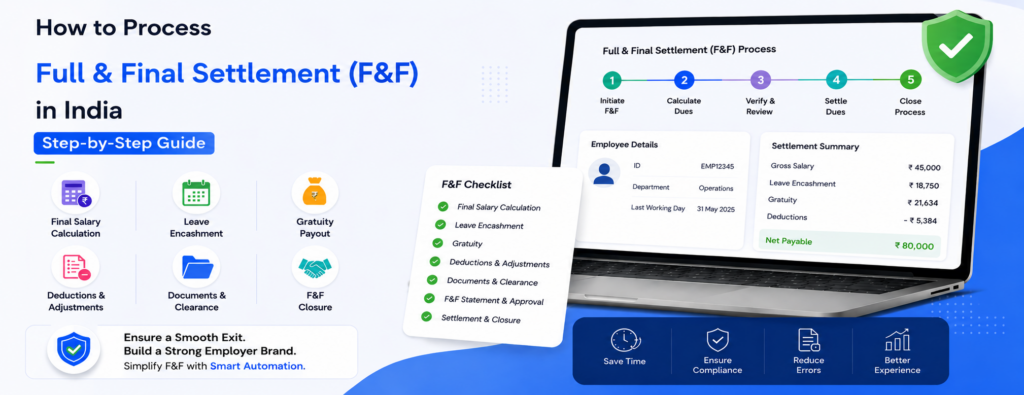
What is Full & Final Settlement (F&F)?
Full & Final Settlement (F&F) is the process of settling all payments due to an employee when they leave an organization due to resignation, retirement, termination, or the completion of a contract.
The settlement ensures that all financial obligations between the employer and employee are completed before the employee exits.
What Does a Full & Final Settlement Include?
A typical Full & Final Settlement includes:
- Salary up to the Last Working Day (LWD)
- Leave encashment (if applicable)
- Bonuses and incentives
- Reimbursements
- Gratuity (if eligible)
- Notice pay or notice period recovery
- Loan or salary advance recovery
- Tax Deducted at Source (TDS)
- Other company-specific deductions
Step-by-Step Full & Final Settlement Process
1. Confirm the Employee’s Exit
Verify the following:
- Resignation approval or termination details
- Last Working Day (LWD)
- Notice period completion or recovery
2. Calculate Salary Payable
Calculate the employee’s final salary based on:
- Last Working Day
- Attendance
- Leave Without Pay (LWP)
- Overtime (if applicable)
- Applicable allowances
3. Calculate Leave Encashment
Review the employee’s eligible leave balance according to the company’s leave policy and calculate the leave encashment amount.
4. Add Bonuses and Reimbursements
Include all approved payments such as:
- Performance incentives
- Bonuses
- Travel reimbursements
- Mobile or internet reimbursements
- Other approved claims
5. Apply Recoveries
Deduct any outstanding recoveries, including:
- Notice pay recovery
- Salary advances
- Company loans
- Asset recovery (if applicable)
6. Check Gratuity Eligibility
Verify whether the employee qualifies for gratuity under applicable laws and include the gratuity amount in the settlement where eligible.
7. Deduct Taxes and Statutory Contributions
Review and apply applicable deductions, including:
- Tax Deducted at Source (TDS)
- Provident Fund (PF), where applicable
- Other statutory or company-approved deductions
8. Review and Approve the Settlement
Before processing payment, obtain approvals from the HR, Payroll, and Finance teams to ensure accuracy.
9. Process the Final Payment
After approval:
- Release the settlement amount
- Share the Full & Final Settlement statement with the employee
- Maintain records for future reference and audits
Common Mistakes to Avoid
Avoid these common mistakes during the settlement process:
- Incorrect Last Working Day
- Missing leave encashment
- Incorrect notice pay calculation
- Excluding pending reimbursements
- Incorrect statutory deductions
- Delayed approvals and payments
How Sumopayroll Simplifies Full & Final Settlement
Sumopayroll helps HR teams simplify the Full & Final Settlement process by enabling them to:
- Record employee exits
- Configure the Last Working Day
- Automatically calculate salary payable
- Include leave encashment, bonuses, and reimbursements
- Apply statutory deductions and recoveries
- Generate settlement statements and reports
- Maintain complete payroll records in one platform
By automating the settlement process, Sumopayroll reduces manual effort, improves accuracy, and helps organizations complete employee exits more efficiently.
Frequently Asked Questions
What is Full & Final Settlement?
Full & Final Settlement is the final payment made to an employee after leaving an organization. It includes salary, leave encashment, gratuity (if applicable), reimbursements, and applicable deductions.
When should Full & Final Settlement be processed?
Organizations should process the settlement after the employee’s Last Working Day, in accordance with company policies and applicable labour laws.
What documents are required for Full & Final Settlement?
Common documents include:
- Resignation acceptance or termination letter
- Attendance records
- Leave balance details
- Reimbursement approvals
- Department clearance documents
Conclusion
A well-managed Full & Final Settlement process ensures employees receive their dues accurately while helping organizations maintain compliance and avoid disputes. By following a structured process and using an automated payroll solution like Sumopayroll, HR teams can reduce manual effort, improve accuracy, and deliver a smooth employee exit experience